How to Get Rid of Pigmentation: What's Causing It and What Actually Works
If you have noticed dark spots, uneven patches or a general dullness that no amount of skincare seems to shift, you are dealing with pigmentation. It is one of the most common skin concerns people seek treatment for, and also one of the most nuanced to treat well.
The reason pigmentation can be so stubborn is simple: most of it is not sitting on the surface of your skin. It lives in the deeper layers, which means serums and brightening products can only take you so far. Understanding what type of pigmentation you are dealing with is the essential first step, because the right treatment depends entirely on the cause.
What Is Pigmentation and Why Does It Happen?
Pigmentation refers to areas of the skin where melanin, the pigment that gives skin its colour, has been produced unevenly or in excess. The result is patches, spots or areas of discolouration that are darker than the surrounding skin.
The most common causes include:
Sun damage is responsible for the majority of pigmentation concerns. Years of UV exposure cause melanin-producing cells to become overactive and clustered, creating freckles, sunspots and age spots. This type of pigmentation tends to become more pronounced over time, particularly without consistent sun protection.
Melasma is a hormonally driven form of pigmentation that typically appears as larger, symmetrical patches across the cheeks, forehead and upper lip. It is particularly common during pregnancy and with hormonal contraceptives, and it sits deeper in the skin than sun-related pigmentation, which is why it requires a more careful treatment approach.
Post-inflammatory hyperpigmentation (PIH) occurs after skin trauma, including acne, picked pimples, burns or aggressive skin treatments. The skin produces excess melanin as part of the healing response, leaving a flat dark mark behind after the original concern has resolved.
Freckles are genetic in origin but significantly amplified by sun exposure. They tend to be most visible after summer and fade slightly in winter, which is a useful indicator that UV is driving their intensity.
Knowing which category your pigmentation falls into matters because treatments that work well for sun damage can actually worsen melasma if not properly managed. This is why a professional consultation is not just a formality; it is what makes the difference between results and setbacks.
Why Topical Products Have Limits
There is a role for good skincare in any pigmentation management plan. Vitamin C, niacinamide, azelaic acid and retinoids can all help brighten the skin, slow new melanin production and support overall skin health. But they work at the surface level, and most pigmentation is not a surface-level problem.
Laser and light-based treatments reach the melanin clusters sitting in the deeper layers of the skin, breaking them down in a way no topical product can replicate. For people who have used brightening products for years without meaningful change, this is usually the explanation.
How Light-Based Treatment Targets Pigmentation
Broadband Light (BBL®) is one of the most effective options for treating sun damage, freckles, age spots and diffuse uneven skin tone. It works by delivering precise pulses of light energy that are absorbed by the melanin clusters in the skin. The targeted pigment is broken down and gradually drawn to the surface, where it flakes away naturally over the days following treatment, revealing clearer, more even skin beneath.
One of the things that makes BBL® particularly well suited to pigmentation is its precision. The light targets pigmented structures specifically, without disrupting the surrounding skin. For widespread sun damage or freckles across the face, chest and hands, this makes it an efficient and effective option.
Results are progressive. Most people notice the most significant improvement across a series of treatments, and many choose to maintain their results with periodic sessions as part of an ongoing skin health plan.
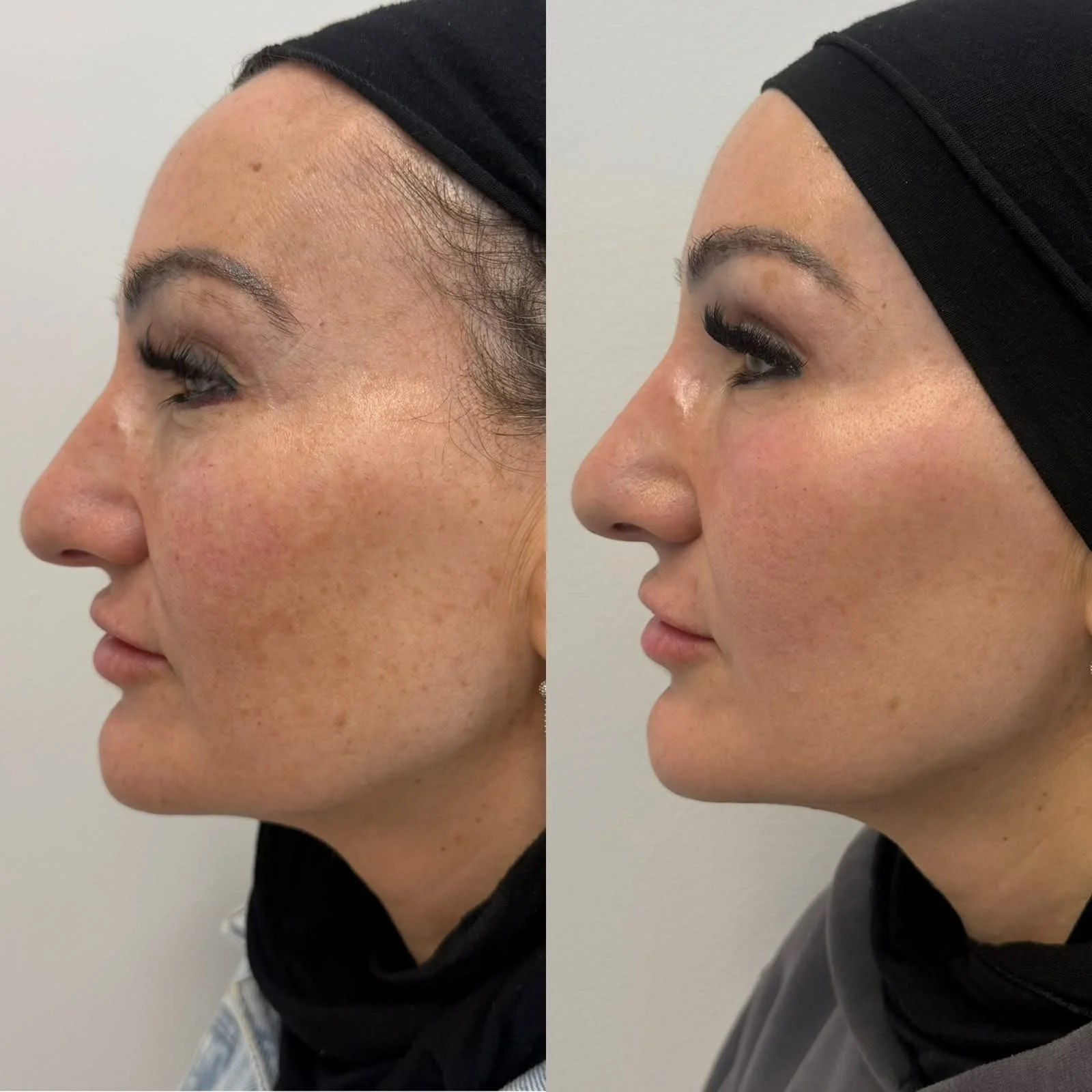
Pigmentation Before and After Light-Based Treatment
When Treatments Are Combined
For more complex pigmentation concerns, or for those looking for a more comprehensive improvement in overall skin quality, BBL® can be combined with other technologies such as MOXI® or HALO® TriBrid for a layered approach.
BBL® paired with MOXI® is a particularly effective combination for managing melasma alongside general pigmentation, as MOXI® can be carefully calibrated for more reactive skin. For significant sun damage, uneven texture and skin quality concerns alongside pigmentation, adding HALO® TriBrid into the plan allows multiple depths of the skin to be addressed simultaneously, treating the pigmentation, stimulating collagen and improving surface quality within the same program.
The right combination always depends on your individual skin, which is why it is determined at consultation rather than chosen from a standard package.
What About Laser Treatment for Sun Spots and Age Spots?
Sun spots and age spots, technically called solar lentigines, are among the most straightforward types of pigmentation to treat with light-based technology. They are superficial, discrete and highly responsive to BBL®. Many people see significant fading after their first few sessions, with spots continuing to lighten across a treatment plan.
If you have a spot you are uncertain about, it is always best to have it reviewed by your GP or dermatologist before treatment to confirm it is benign. This is standard practice and the responsible approach before any laser pigmentation removal.
The Role of Sun Protection
There is no treatment, however advanced, that will produce lasting results without daily sun protection. UV is the primary driver of most pigmentation, and unprotected exposure between treatments will actively counteract the progress being made.
Broad-spectrum SPF 50+ worn daily, regardless of whether you are spending time outdoors, is the non-negotiable foundation of any pigmentation management plan. It directly affects what you can realistically expect from any treatment.
Is Laser Pigmentation Removal Right for You?
Laser pigmentation removal may be appropriate if you are dealing with sun damage and freckles, age spots and sunspots on the face, chest or hands, post-inflammatory marks left behind from acne or skin trauma, uneven skin tone and dullness, or melasma alongside other pigmentation concerns.
Suitability depends on your skin type, the nature of your pigmentation and your overall skin health, all of which should be assessed thoroughly before any treatment plan is recommended. Certain skin types require more conservative treatment parameters, and some pigmentation types respond better to combination approaches than others.
Book Your Pigmentation Consultation at AESTHETICA HQ
If you have been living with pigmentation, sun damage, freckles, age spots or uneven skin tone and want to understand what is actually possible for your skin, a consultation is the right place to start.
At AESTHETICA HQ, we take the time to identify exactly what is driving your pigmentation and build a treatment plan designed for meaningful, lasting improvement. No guesswork, no generic protocols. By combining advanced technologies such as BBL® HEROic™, MOXI® and HALO® TriBrid, we can address pigmentation at every level while supporting your long-term skin health.
We believe healthy skin is a journey, not a single treatment. If you are ready to take the first step, we would love to help.